
- By Allfix star
- 20 Jul, 2025
- Villa Renovation
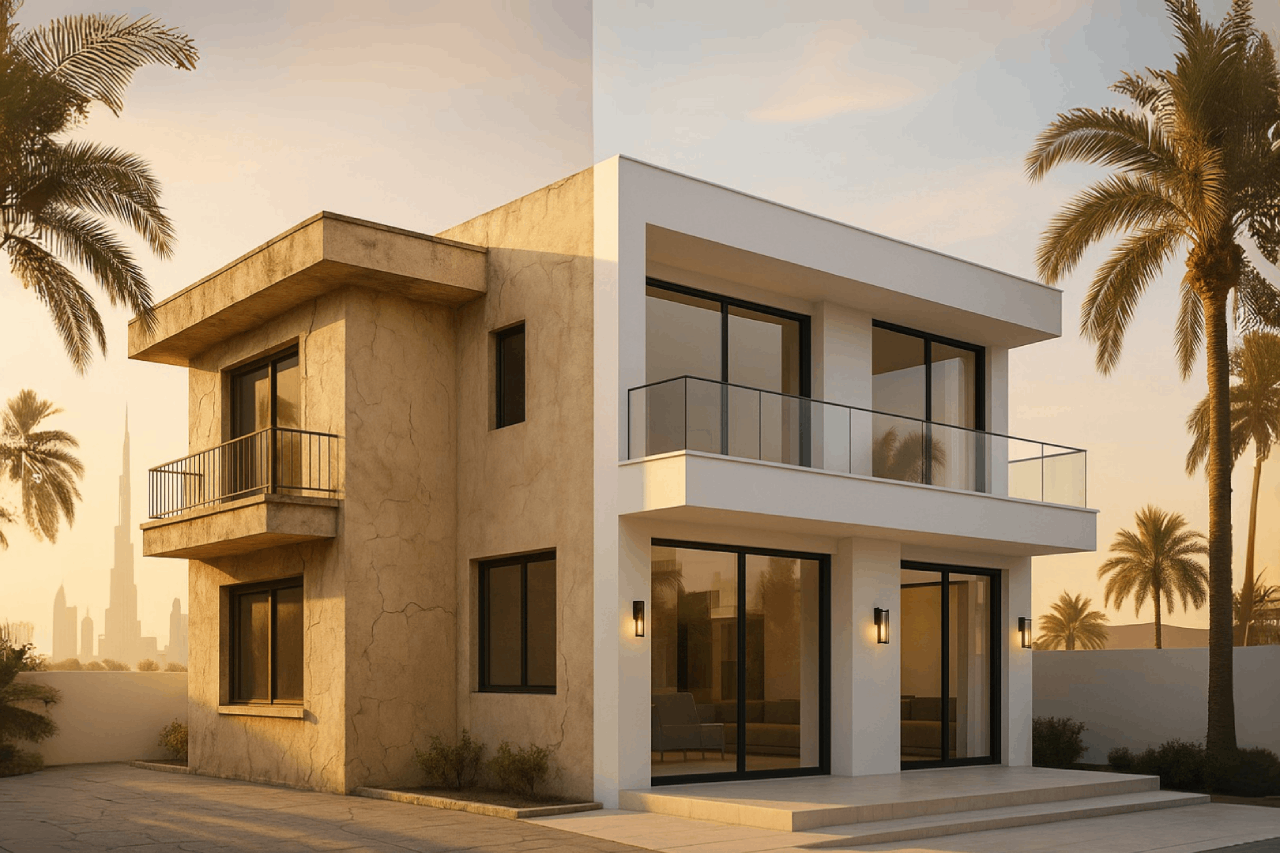
Thinking of renovating your Dubai villa? Discover real costs, smart tips, and expert advice to plan your upgrade the right way.
Renovating a villa in Dubai is an amazing opportunity to transform your home into a more luxurious, functional space. It can significantly boost your property’s value and improve your quality of life, but it’s also a major project that requires careful planning and budgeting.
Whether you’ve just bought an older villa that needs an update or you’re upgrading your long-time family home, understanding the costs, process, and best practices is essential.

If you’re looking for villa renovation near Dubai or within the city, this comprehensive guide covers everything you need to know. We have covered from average renovation costs and factors that influence your budget to tips for saving money and choosing the right contractor.
Why Renovate Your Villa in Dubai?
Dubai’s real estate scene keeps evolving, and if your villa was built in the early 2000s or before, there’s a good chance it no longer feels up to date. Renovating it isn’t just about looks; it comes with many advantages.
Increase Property Value
A well-planned renovation can substantially raise your home’s market value and appeal to future buyers or tenants.
In fact, experts note that a top-quality villa remodel can yield a 20–35% increase in property value in premium districts of Dubai. Upgrades like modern kitchens, new bathrooms, and landscaped outdoor spaces make your property more attractive in the competitive Dubai market.
Modernize and Personalize Your Space
A villa renovation near Dubai is often the smartest way to transform an outdated property into something that truly reflects your lifestyle.
Instead of settling for generic designs, you can open up your floor plan, install custom cabinetry, or even introduce smart home systems; from app-controlled lighting to voice-activated security. These upgrades are not just cosmetic. In communities like Jumeirah and The Lakes, many homeowners now prefer to renovate existing villas to achieve a more tailored living experience.
In fact, many experts suggest that villa renovations have grown in popularity due to high demand and rising prices of new homes.
Improve Energy Efficiency and Functionality
With Dubai’s hot climate, villa remodeling can significantly improve comfort and lower monthly bills. Older homes often lack insulation or use inefficient cooling systems that strain your budget.
It has been reported that modern villas equipped with double-glazed windows, reflective paints, and updated HVAC systems can cut DEWA bills by up to 30 to 40 percent. Renovation also allows you to reconfigure the internal layout to make better use of space.
Whether you need a larger kitchen, more storage, or better indoor-outdoor flow, a smart redesign makes the home more liveable while increasing long-term value.
Avoid the High Cost of Relocating
Choosing a villa renovation in Dubai over relocation is often more economical. Buying a new home includes Dubai Land Department fees (4%), agent commissions, moving expenses, and furnishing, all of which add up.
Instead, homeowners in areas like Arabian Ranches are upgrading existing villas for a fraction of the cost. A study by ValuStrat highlights that thoughtful renovations can deliver returns of 20%-30% on resale, especially if kitchens, bathrooms, and flooring are upgraded.
Fix Aging Infrastructure and Hidden Issues
Many villas built in the early 2000s or before now show signs of aging. Water leaks, outdated electrical wiring, inefficient plumbing, and weather-damaged exteriors are more than just inconveniences, they’re risks.
Through comprehensive villa renovation, you can replace worn-out systems with modern, safe, and code-compliant alternatives. Dubai Municipality regulations require updates to outdated electrics and plumbing for safety.
A growing number of homeowners are investing in structural repairs as part of their renovations, not just aesthetics.
Understanding Villa Renovation Costs in Dubai
One of the first questions homeowners ask is, “How much will it cost to renovate my villa in Dubai?” The answer can vary widely.
Renovation costs depend on the villa’s size, the extent of the work, the quality of materials, and labor charges in the UAE. Here are some key points to understand:

Overall Cost Range
For a full villa renovation (interior and structural remodeling), costs typically range from around AED 300,000 on the lower end to AED 1,000,000 or more for high-end projects.
Luxury villa makeovers with extensive structural changes or premium finishes can even reach AED 3.5-5+ million in some cases. On the other hand, partial renovations or smaller updates (like a couple of rooms) might be as low as tens of thousands of dirhams.
Every project is unique – a modest cosmetic update will cost far less than a down-to-the-concrete overhaul.
Cost per Square Foot
Another way to estimate the budget is by size. Industry experts often cite an average of AED 50 to AED 200 per square foot for complete home renovations in Dubai.
This means that, for example, renovating a 4,000 sq. ft. villa could cost roughly AED 200,000 on the low end up to AED 800,000 or more for a high-spec renovation. The wide range reflects factors like material quality and complexity of work.
High-end projects even go beyond this range – one source notes that ultra-luxury renovations can exceed AED 1000 per sq. ft. for top-of-the-line homes.
To put it in perspective, renovating an average three-bedroom villa (with perhaps 2,500–3,000 sq. ft. of built-up area) might start around AED 500,000–600,000 for basic upgrades and rise to AED 1 million or more if you’re doing extensive modifications.
This could include updating finishes, kitchens, bathrooms, and some layout changes. If major structural changes are planned (like moving walls or adding extensions), costs will increase further.
Keep in mind that these figures are broad averages. A budget-friendly renovation focusing on essential improvements can be well under these numbers, while a no-expense-spared luxury transformation will be higher. It’s wise to get a detailed quote based on your specific plans.
Carefully calculate all projected expenses – materials, labor, permits, etc. – when planning your renovation budget. Breaking down the costs by each category gives a clear picture of where the money will go.
Key Factors That Influence Renovation Cost
Several key factors will influence the total cost of renovating your villa in Dubai. Understanding these will help you plan your budget and make informed decisions:
Property Size and Type
The bigger the villa, the more area there is to renovate, which directly drives up costs. A small two-bedroom villa might require far less work (and money) than a sprawling five-bedroom estate. Additionally, the layout and design of your property matter.
For instance, a villa with extensive outdoor areas (gardens, patio, pool) could involve landscaping costs that an apartment or townhouse wouldn’t. As a rough guide, renovating a compact 1-bedroom apartment might cost AED 28K-88K, whereas a large villa renovation easily runs into hundreds of thousands.
Scope of Renovation
Ask your renovation company this question first: “How extensive is the project?’
This is one of the biggest cost drivers. A full renovation (where you update almost everything – floors, walls, kitchen, bathrooms, maybe change the floor plan) will obviously cost more than a partial renovation focused on one area.
If you’re doing structural modifications – for example, knocking down walls to open up the layout, building an extension, or adding a new room – expect higher costs due to additional engineering, permits, and construction work.
In Dubai, completely reconfiguring a villa’s layout or structure can push renovation costs into the millions.

Quality of Materials and Finishes
The choice of materials has a huge impact on cost. There’s a big difference between standard-grade materials and top-of-the-line finishes.
For instance, using imported Italian marble flooring or custom-made cabinetry will raise expenses significantly compared to local ceramic tiles or off-the-shelf cupboards. Premium brands for fixtures (lighting, faucets, appliances) come at a higher price point as well.
While high-quality materials cost more upfront, they often last longer and add more value to the home. Sustainable and eco-friendly materials are also becoming popular in Dubai; they may cost a bit more initially but can future-proof your home to meet new regulations.
Ultimately, you’ll need to balance your desired aesthetic and quality level with your budget.
Labor and Contractor Fees
Labor is a substantial part of renovation expenses.
Experienced contractors, engineers, designers, and skilled tradespeople (plumbers, electricians, carpenters) each come with fees. In Dubai, labor costs can vary – you might find a handyman team at a lower rate, but for a large villa project, you’ll likely hire a professional renovation company or general contractor.
Their pricing will account for project management, workmanship, and sometimes a premium for reputation. Hourly rates for skilled labor can range widely (for example, electricians or carpenters might charge anywhere from around AED 80 up to AED 400 per hour depending on expertise). However, most renovations are quoted as a package or per project rather than hourly.
Always make sure you’re dealing with licensed professionals who follow safety standards – cutting costs on labor by hiring unqualified workers can lead to expensive mistakes or unsafe results.
Design and Engineering Services
If your renovation involves design changes, you might need an architect or interior designer to draw up plans.
Professional design services add to upfront costs but can save money by avoiding errors and optimizing space. They’ll create layouts, 3D renderings, and technical drawings, and sometimes assist with material selection.
Similarly, structural changes will require an engineer’s input. Some full-service renovation companies include design and engineering in their proposal, while others charge separately. It’s worth investing in good design; a clear plan will make the construction phase smoother and help avoid costly changes later.
Permits and Approvals
In Dubai, certain renovation works require approvals from authorities or your community developer. These can include permits from Dubai Municipality for structural alterations, DEWA (Dubai Electricity and Water Authority) approval for significant electrical or plumbing changes, and NOCs (No Objection Certificates) from your villa community (e.g., Emaar or Nakheel if you live in their development).
Permit fees are generally a small percentage of the project cost but should be budgeted. For example, a standard building permit could range roughly AED 500 to AED 15,000 depending on the size of the project. A DEWA electrical permit might be around AED 500–1,000.
If your renovation affects fire safety (say, adding a floor or making major changes), Civil Defence approval (costing a few hundred dirhams) may be needed.
Skipping required permits is not an option, as it can lead to fines or issues when selling the property. A good contractor will help identify which approvals are necessary for your scope of work.
Timeline and Urgency
The duration of the project can indirectly affect cost. For instance, if you need the renovation completed very quickly (perhaps to move in by a certain date), contractors might charge more for an expedited schedule or for overtime labor.
Conversely, a flexible timeline could allow for better scheduling of work and possibly cost savings. Keep in mind, a typical full home renovation can take several months – often 3 to 6 months or longer for a comprehensive villa remodel.
Plan accordingly for temporary living arrangements if you cannot stay in the home (which is another potential cost, as discussed later).
Unforeseen Issues
Finally, always factor in a contingency for unexpected problems.
Once work begins, contractors might discover hidden issues such as mold, structural defects, or outdated wiring that needs replacement. Older properties in particular can harbor surprises behind the walls or under the floors.
It’s wise to set aside around 10-15% of your budget for contingencies, so you have a buffer if something unforeseen arises.
Breakdown of Common Renovation Costs by Area
Every renovation is different, but it helps to know typical cost ranges for different parts of the villa.
Below is a breakdown of common renovation components and what they might cost in Dubai. These are general estimates for 2025 and can vary based on material choices and design complexity:
Kitchen Renovation
Kitchens are often the most expensive room to renovate in a home, due to the cabinetry, countertops, appliances, and plumbing/electrical work involved. In Dubai, a basic kitchen upgrade (refurbishing cabinets, standard countertops, basic fittings) might cost around AED 20,000 to AED 40,000 for a small kitchen. This would cover new finishes but using affordable materials.
A mid-range kitchen renovation – perhaps for a larger kitchen or using mid-quality materials – can range roughly AED 50,000 to AED 120,000. This might include installing semi-custom cabinets, better appliances, and upgraded flooring.
For a high-end luxury kitchen, expect AED 120,000 up to AED 250,000 or more. Luxury kitchens often feature custom-designed cabinets (maybe from European brands), stone or quartz countertops, premium imported appliances, smart kitchen gadgets, and designer lighting.
It’s not uncommon for high-spec kitchen remodels in upscale Dubai villas to cross the 200k mark if you’re going for a showpiece kitchen with top-of-the-line everything.
Keep in mind, these costs also depend on kitchen size. A large open-plan kitchen with an island will cost more than a compact galley kitchen.
When budgeting, remember to account for all aspects: cabinetry, countertops, backsplash, sinks and faucets, lighting, appliance purchases, flooring, and even painting or wall treatments.
Bathroom Renovation
Upgrading bathrooms is another priority for many villa renovations. Costs can vary based on bathroom size (guest powder room vs. large master bath) and the finishes you choose. For a basic bathroom remodel, you might spend about AED 10,000 to AED 20,000 for a small bathroom using standard tiles and fixtures. This would cover installing new fittings (toilet, basin, shower), simple tiling, and maybe a cabinet.
A mid-range bathroom renovation could be in the ballpark of AED 30,000 to AED 60,000 for a larger bathroom or higher quality fittings. This might include better grade tiles (such as porcelain or textured ceramics), a glass shower enclosure, a nicer vanity, and updated lighting.
For a luxury bathroom with high-end fixtures (like a rainshower, standalone bathtub, smart toilet, custom vanity, and premium marble or granite surfaces), the cost can run AED 70,000 to AED 150,000+. Opulent master bathrooms in luxury Dubai villas – with features like imported stone, designer hardware, and maybe integrated sound or lighting systems can reach into six figures.
As with kitchens, the sky’s the limit if you opt for exclusive materials (for example, genuine marble slabs or high-tech Japanese bidet toilets).
One cost tip: relocating plumbing (moving the toilet or shower to a new spot in the bathroom) will add expense, as it involves rerouting pipes and drainage. Keeping the general layout the same can save money.
Flooring
Replacing flooring throughout the villa can dramatically change its look. Flooring costs depend on material type and quality. Here are typical price ranges in Dubai (materials plus installation):
Ceramic or Porcelain Tiles: Approximately AED 50 – AED 150 per square meter for standard tiles. These are common and cost-effective for living areas, kitchens, or bathrooms. There’s a wide variety of designs and qualities in this range.
Laminate or Vinyl Flooring: These might cost around AED 75 – AED 150 per sqm, similarly priced to basic tiles, and offer quick installation and variety of looks (e.g., wood-look).
Wooden Flooring: Real hardwood or engineered wood floors come at a premium – roughly AED 150 – AED 300 per square meter installed. Price varies by wood type (oak, walnut, etc.) and finish. Wooden floors give a high-end feel but need care in Dubai’s climate (humidity can be an issue, so proper installation is key).
Marble or Stone Flooring: Marble, granite, or other natural stones are luxurious options. Expect costs in the range of AED 300 – AED 700 per square meter. High-grade imported marble is at the top end (or beyond). Stone floors are durable and upscale, often seen in luxury villas, but they increase your budget significantly.
Keep in mind, the above are per square meter prices (not square foot). To convert, 1 sqm ≈ 10.76 sq ft. Also, if your renovation includes replacing floor tiles, remember to include the cost of removing the old flooring and disposing of debris in your budget.
Painting and Wall Finishes
Refreshing the paint can give any villa a new feel. Paint costs depend on the paint quality (economy vs. premium washable paint) and whether you’re doing simple painting or specialty wall finishes.
For basic interior painting, you might pay around AED 5 – AED 20 per square foot of painted area. This range would cover standard paint in a few coats. For an average villa, painting all the interior walls could be in the low tens of thousands of dirhams. Some contractors quote painting by square foot of built-up area instead; for example, AED 5 per sq ft for a basic job means a 3,000 sq ft villa might cost ~AED 15,000 for a fresh coat of interior paint.
If you opt for high-end paints or decorative finishes, costs go up. Textured paints, special effects, or luxury brands might run AED 30 – AED 80+ per sq ft. Accent walls with Venetian plaster, faux finishes, or wallpaper will each have their own pricing. Wallpaper, for instance, can vary widely but premium wallpaper might be AED 40–100 per sq ft including installation, depending on material.
Don’t forget exterior painting if it’s part of your project. Exterior paint may cost a bit more if special weather-resistant products are used. Always use a good quality paint in Dubai; the intense sun and occasional sandstorms mean cheap paint will degrade faster..
Electrical and Plumbing Upgrades
When renovating an older villa, it’s common to update the mechanical, electrical, and plumbing systems (often abbreviated as MEP). This ensures the home meets modern standards and can handle new appliances or fixtures safely.
Electrical
A basic electrical rewiring or upgrade (changing the fuse box, adding some outlets, new light switches) might cost on the order of AED 5,000 – AED 15,000 for a small house.
However, if you’re completely rewiring a larger villa or installing a new smart home system, the cost could be AED 15,000 – AED 50,000 or more. Upgrading the electrical panel (circuit breaker board) alone can be a few thousand dirhams, but is often necessary for safety if the existing one is old.
Modern lifestyles require lots of power points and robust electrical capacity (for all those gadgets and AC units), so don’t skimp on this area.
Plumbing
Costs depend on whether you are just replacing fixtures or redoing pipes.
Replacing old pipelines or drainage lines in a villa could cost AED 10,000 – AED 40,000 in total. This might include installing new water lines, upgrading to PPR pipes, adding a water heater or water pump, etc.
If your renovation doesn’t involve moving bathrooms or kitchens, you might not need extensive plumbing work beyond installing new faucets and sanitary ware (which is usually included in the bathroom renovation cost).
But for major changes or older homes, allocate budget to update plumbing, leaks can be very damaging, so it’s better to renew any suspect old pipes while walls are open.
Air Conditioning
Dubai villas depend heavily on air conditioning. While not mentioned in every renovation, if your villa has an aging AC system, consider upgrading it as part of the project.
Installing new AC units or a central cooling system can be expensive (several thousand dirhams per unit or more for central systems), but new units will cool more efficiently and use less electricity.
Some renovation firms offer package deals for AC, especially if you want to switch to more efficient HVAC systems. Make sure your contractor includes the cost of any necessary duct work or insulation improvements if AC is being addressed.
Custom Carpentry and Interior Features
Many villa renovations involve custom carpentry or specialty interior features to add a unique touch:
Built-in Wardrobes & Cabinets: Adding or updating built-in closets in bedrooms or custom cabinets in studies/living rooms might cost AED 10,000 – AED 50,000 in total, depending on how many and the design complexity. Simple built-in wardrobes with laminate finish will be on the lower end, while high-end ones with wood veneer, mirrors, and internal lighting will push toward the higher end.
False Ceilings & Lighting Design: A popular upgrade is installing false ceilings with recessed lighting or LED strip lighting for a modern look. Ceilings also help conceal new ductwork or wiring for AC and lights. The cost for false ceiling work can range from maybe AED 5,000 for a couple of rooms up to AED 30,000 for an entire villa with elaborate designs. This includes gypsum board ceilings, painting, and basic lighting fixtures. Fancy cove lighting or feature ceilings (with layers, woodwork, etc.) will be more.
Smart Home Features: Integrating smart home technology (smart lighting systems, thermostats, security cameras, automatic blinds, etc.) can add a few thousand dirhams to your project as well. For example, a basic smart lighting setup or smart AC controls might add AED 5k–15k depending on how many rooms you equip. A fully integrated home automation system (controlling lights, climate, CCTV, music, etc.) could run much higher, so it’s very optional based on budget.
Luxury Additions: If you plan to include special amenities like a home theater room, a gym, or a spa (sauna/steam room), those will have their own costs. A dedicated home cinema with soundproofing and equipment could easily cost AED 50k+, and a small sauna installation might be in the tens of thousands. These are very individualized costs but keep them in mind if they’re part of your dream renovation.
Exterior and Landscaping
For villas, don’t forget the outside! Exterior renovations can include painting the facade, changing the front door or windows, landscaping the garden, or adding features like a pergola or swimming pool.
Exterior Facade Renovation
A villa renovation near Dubai often begins with the facade, as first impressions matter. Repainting your villa exterior typically costs between AED 10,000 and AED 30,000, depending on its size and the quality of paint used.
However, if you're considering a more substantial transformation, such as cladding walls with stone or adding decorative architectural elements; this falls under exterior facade renovation.
These upgrades can elevate the entire look of your property, although costs will increase accordingly, often ranging from AED 40,000 upward, based on materials and complexity.
Windows and Doors Upgrade
Replacing your villa’s windows and doors is a key element in any villa renovation project in Dubai. Moving to double-glazed, energy-efficient windows can make a measurable difference in comfort and DEWA utility bills, cool interiors and reduced heat transfer mean lower cooling demands.
Such replacements typically cost tens of thousands of dirhams, as prices vary by size, frame material, and glazing specification. A high-quality main entrance door, crafted from solid wood or metal, usually adds another AED 3,000–10,000 depending on design and finish, making your home both secure and appealing.
Landscaping and Outdoor Upgrades

Landscaping is another essential part of a Dubai villa renovation, turning your outdoor space into an inviting extension of your home. Basic garden work, like laying new grass (natural or astro-turf), adding planters, or installing outdoor lighting starts at AED 3,000–15,000 for small to medium yards in Dubai.
For a more comprehensive exterior overhaul featuring stone pathways, irrigation, seating areas, or pergolas, costs can rise substantially, often reaching AED 30,000–50,000+, especially if you’re including luxury elements such as outdoor kitchens or water features.
Swimming Pool Installation or Renovation
A swimming pool is often a highlight in a full villa renovation in Dubai, but it’s important to budget carefully. Installing a new basic concrete pool typically costs AED 60,000–80,000, while more customized or larger pools, especially those with built-in lighting, water features, or cooling systems can range from AED 130,000 to AED 300,000 or more.
Keep in mind that pool installation requires approvals from Dubai Municipality, plus upkeep costs usually run at around AED 4,000–6,000 yearly, so it’s wise to factor maintenance into your overall villa renovation budget.
As you can see, renovation expenses can add up across many areas. The key is to decide your priorities – maybe you’re willing to splurge on the kitchen and save on something else, or vice versa. A reliable contractor like Allfix Star Technical Services will usually break down costs for each aspect, which helps identify where you might want to adjust choices to meet your budget.
Hidden Costs and Additional Expenses to Consider
When planning a villa renovation, it’s important to account for some additional costs that people might overlook initially. These “hidden” or secondary expenses can impact your overall budget and logistics:
Permit Fees and Approvals
As noted earlier, if your project requires permits (e.g., structural changes, electrical upgrades), you’ll need to pay the relevant fees. These could be a few hundred dirhams to several thousand.
For example, a Dubai Municipality building permit might cost around AED 500 – AED 5,000 for minor works, and more for major renovations. Some communities also require a refundable construction deposit to cover any damages to common areas during renovation (often around AED 5,000–10,000, which you get back if all is okay).
Temporary Accommodation
If your renovation is extensive, you may not be able to live in the villa while work is ongoing (due to noise, dust, or lack of utilities).
Many families opt to rent a short-term apartment or stay in a hotel/vacation home during the messy phases of construction. This is an extra cost to budget for – a month or two of alternative housing can cost quite a bit in Dubai. However, some people choose to live in a part of the house while another part is renovated (if space and safety allow) to save on this expense.
Storage and Moving Costs
Related to the above, you might need to move furniture and belongings out of the way. Renting a storage unit for your furniture for a couple of months is another expense (and also hiring movers to pack and shift things out, then back in when done).
Waste Disposal and Cleaning
Professional contractors typically include debris removal in their quotes, but always double-check. After demolition, there will be a lot of rubble, old tiles, etc. If it’s not included, you might have to pay for a skip (dumpster) or hauling service.
Additionally, after renovation, a deep cleaning of the villa is highly recommended before moving back in – either the contractor does it or you hire cleaners. This cost isn’t huge but should be noted.
Design Changes Mid-Project
If you decide to make changes to the plan once renovation is underway, it can increase costs.
For example, changing material selection late (upgrading to a more expensive tile) or altering a layout after walls are down can lead to extra charges and wasted materials. It’s best to finalize decisions before work starts to avoid costly change orders. Always have a bit of extra budget for minor changes or upgrades you might request as things take shape.
Unexpected Repairs
Once work begins, surprises can pop up.
Perhaps the contractor finds hidden water damage in the walls, or discovers that some structural element isn’t up to code. Fixing these issues will be crucial for safety, but they come with a cost. Similarly, the need to upgrade an old electrical panel or add additional waterproofing might arise.
Having a contingency fund (around 10-15% of project cost) to handle these surprises will save you stress later.
Inflation and Price Fluctuations
The cost of materials can fluctuate with market conditions. Between the time you plan and the time you purchase, items like lumber, steel, or imported fixtures might increase in price.
In 2024-2025, some building materials have seen price volatility globally. A fixed contract with your contractor can lock in prices for you, but if you’re sourcing materials yourself, keep an eye on market trends.
Value Added Tax (VAT)
Don’t forget VAT (Value Added Tax) of 5% in the UAE. Most quotations will list whether they include VAT or if it’s added on top. It’s a small percentage, but on a large renovation, 5% of hundreds of thousands of dirhams is still significant.
Post-Renovation Touches
Finally, once major work is done, you might want to budget for furnishing or decorating your updated space. New furniture, curtains, smart TVs, decor pieces – these are outside the construction scope but completing a renovation often inspires these purchases.
While not a “hidden cost” of construction, it’s something to keep in mind so you’re financially ready to enjoy your fully finished home.
By anticipating these additional costs, you can budget more accurately and reduce the likelihood of unpleasant financial surprises during your villa renovation journey.
Tips to Save Money on Your Villa Renovation
Renovating can be expensive, but there are ways to make it more cost-effective without compromising on your vision. Here are some practical tips to help you save money or get better value during a renovation:
Plan and Prioritize
Before you start, list out what you want vs. what you truly need. Decide on “must-haves” (structural fixes, essential upgrades) versus “nice-to-haves” (cosmetic changes, luxury extras). This helps allocate your budget to the most important items first. A detailed plan and design upfront will prevent costly changes later. Essentially, measure twice and cut once – the more thoroughly you plan, the fewer expensive surprises or changes mid-project.
Get Multiple Quotes
Don’t settle with the first contractor quote you receive. It’s advisable to get at least 2-3 quotes from reputable renovation companies in Dubai. Ensure each provides a detailed breakdown of works and costs. Be wary of quotes that are significantly lower than others – it could be a red flag for poor quality or hidden charges. Aim for a balance of reasonable pricing and confidence in the contractor’s ability.
Reuse and Refurbish
Not everything in your villa may need to be replaced. You can save by refurbishing certain elements. For example, solid wood doors can be sanded and re-polished instead of buying new ones. Good quality cabinets might be given a facelift with new paint or handles. Sometimes reupholstering furniture or deep-cleaning marble floors can make them look new. If the kitchen carcasses (the inner cabinet boxes) are in good shape, you could replace only the doors and countertop for a refreshed look at a fraction of full kitchen cost. Evaluate what can be salvaged or upgraded instead of tossed out.
Shop Smart for Materials
If you have the time and inclination, source materials yourself. Contractors usually add a markup on materials. You might find tiles, lights, or sanitary ware on sale at local suppliers or even online marketplaces. Dubai has many building material markets (like in Deira or Satwa) where you can compare prices. However, ensure the quality is good and that the items meet any required specifications. Sometimes, using a slightly less famous brand for things like faucets or lights can dramatically cut cost while still giving you a quality product.
Opt for Quality, Cost-Effective Finishes
You don’t always need the most expensive option; you need the one that offers the best value. For instance, instead of natural marble (which is expensive and porous), you might choose a high-quality porcelain tile that mimics marble – it can be much cheaper, easier to maintain, and still looks great. For cabinets, UV-coated or laminate finishes can be far more budget-friendly than solid wood veneers but still durable and attractive. Discuss alternative material options with your contractor or designer; they often know good substitutes that fit a tight budget.
Don’t Change Scope of Work
Stick to the plan as much as possible. Many cost overruns happen because of continuous additions: “since we’re at it, let’s also upgrade this…” While it’s tempting to keep adding, try to prevent the scope from ballooning.
Define the project clearly at the start with your contractor. Of course, minor changes will happen, but keep them minimal. A well-defined contract can help here, so any extra work is transparently quoted and only done if you approve.
Do It in Phase
If you don’t want to spend on everything right now, consider renovating in stages. Perhaps focus on the ground floor first, then the upstairs next year, or tackle the interior and leave the landscaping for later.
Phased renovations can help spread out costs over time. Just be mindful that doing everything in one go is often more cost-efficient (contractors give better rates when they have more work at once, and you save on repeated setup costs). But if budget is a constraint, phasing is a valid approach.
Stay Involved and Monitor
While you should trust your contractor, it helps to stay involved. Regularly visit the site or have meetings to see progress. Catching a mistake early (maybe the wrong tile was delivered, or a design detail is off) can save money versus fixing it after completion.
Good communication can also prevent rework. If you see something concerning, bring it up immediately so it can be addressed before it becomes a costly redo.
Consider Long-Term Savings
Lastly, remember that the cheapest upfront isn’t always cheapest in the long run. Spending a bit more on energy-efficient windows, better insulation, or efficient AC can reduce your utility bills for years to come. Quality waterproofing in bathrooms and roofs will prevent leaks that could otherwise cost a lot to repair later. So, invest smartly in things that give long-term value, even if the initial cost is slightly higher.
By using these strategies, you can stretch your renovation dirhams further. Many Dubai homeowners have achieved beautiful results on a budget by being creative and pragmatic in their approach.
Choosing the Right Renovation Company in Dubai
One of the most crucial decisions in your renovation journey is selecting a reliable contractor or renovation company to carry out the work. Dubai has many contractors – from large firms to independent teams – but their quality and services can vary widely. Here’s what to look for when choosing a villa renovation company in Dubai that fits your needs:
Professional contractors at work: Always check the credentials and past projects of any renovation company you engage in. A skilled team with experience in Dubai will ensure quality workmanship and compliance with local regulations.
Experience and Portfolio
Look for a contractor with extensive experience, especially with villas or projects similar to yours. Ask to see their portfolio or visit completed project sites if possible.
A company that has done many renovations is more likely to handle surprises better and deliver quality. For example, AllFixStar Technical Services LLC (a reputed Dubai renovation firm) highlights projects where they transformed outdated villas into modern homes, demonstrating expertise in both design and execution.
An experienced team will understand local architectural styles and common issues in Dubai homes.
License and Permits Handling
Ensure the company is properly licensed in Dubai to perform renovation or contracting work. Licensed contractors are familiar with the authority approval process.
They should be able to help obtain necessary permits and NOCs on your behalf, which is a big plus. This expertise prevents legal troubles or delays – as they know the procedures with Dubai Municipality, Emaar/Nakheel (if in a community), DEWA, etc.
Don’t hesitate to ask for their Dubai municipality contractor license number or similar credentials.
Transparent Pricing
A professional contractor should provide a detailed, transparent quote. It should list the scope of work, materials included (or excluded), labor, timeline, and payment schedule.
Be cautious of any contractor who gives a vague lump sum without details. Also clarify how changes or additional works will be charged.
Trustworthy companies operate with clear contracts and do not hit you with surprise fees later. It’s reasonable to make a down payment and staged payments, but tie payments to progress milestones. A typical payment schedule might be 40% upfront, 50% upon major completion, and 10% upon final handover – find terms that are fair to both parties.
Reviews and Testimonials
Check reviews, if available, or ask for references from past clients. Many companies will have testimonials on their website, but also look at third-party sources or community forums for any red flags.
A contractor with happy customers is a good sign. You can even ask the contractor if you can speak to one of their previous clients or see ongoing work. Word of mouth in Dubai’s expat and local communities is powerful – companies like AllFixStar build their reputation on trust and quality service, leading to referrals.
Insurance and Warranty
Make sure the contractor has proper insurance. For instance, reputable contractors carry public liability insurance (often up to AED 1 million coverage) and worker’s compensation.
This protects you in case of accidents or damage during the renovation. Additionally, inquire about warranty or maintenance period after completion. Good contractors stand by their work.
It’s common to have a defect liability period of 6 to 12 months after handover, during which they will fix any issues that arise (like a leaking pipe or a crack that appears) without extra charge. This should be stipulated in the contract.
Project Management and Communication
Renovation is a complex process, so you want a company that communicates well and manages the project efficiently.
Do they have a project manager or site engineer who will supervise daily work? Will they provide you with regular updates or are they okay with you visiting the site?
Clear communication is key to avoiding misunderstandings. Also, discuss the timeline – how long they expect the renovation to take and how they will ensure it stays on schedule. While delays can happen, a committed contractor will do their best to meet deadlines and will inform you promptly of any issues.
One-Stop Solution
Some homeowners prefer a company that can handle everything end-to-end: design, approvals, construction, and even interior decor. Others might already have a designer and just need a builder.
Figure out which model you need. An integrated design-build firm can be convenient since they take care of every aspect under one roof.
For example, AllFixStar offers comprehensive services including free basic design consultation, permit acquisition, and full execution, which can simplify the process for clients. If you go that route, ensure you like their design style and they understand your vision.
Taking the time to select the right contractor will save you headaches later. Don’t rush this step – meet with multiple companies, ask lots of questions, and go with the team that instills confidence through their professionalism, knowledge, and transparency.
A good renovation company will not only do the work, but also guide you through technical decisions, handle permissions, and deliver a smooth experience.
Final Thoughts
Renovating your villa in Dubai can be one of the best investments you make in your home – both for personal enjoyment and for increasing its value. We’ve seen that costs can range widely, from relatively small upgrades to multi-million-dirham luxury overhauls, depending on your needs and budget. By understanding the factors that drive those costs and planning carefully, you can avoid unpleasant surprises and make the most of your budget.
Remember to account for everything: the visible costs like materials and labor, as well as hidden ones like permits or temporary living.
Finally, when in doubt, consult professionals. Don’t hesitate to reach out for expert advice or quotes. If you’re considering a villa renovation in Dubai or nearby areas, AllFixStar Technical Services LLC is here to help.
With years of experience in home renovations across Dubai, we offer premium, practical solutions tailored to your needs. Contact us today for a consultation and let us help you transform your villa into your dream home!